Emily Kumpel PI
Dr. Emily Kumpel (she/her) is an Associate Professor in the Environmental and Water Resources Engineering (EWRE) group in the Department of Civil and Environmental Engineering at the University of Massachusetts Amherst. She has an M.S. and Ph.D. in Civil and Environmental Engineering from the University of California, Berkeley, and a B.S. in mechanical engineering from Johns Hopkins University. Dr. Kumpel has over a 15 years of experience conducting research on topics including intermittent water supply, water quality in distribution systems, water access and equity, and water quality monitoring in water delivery systems. Prior to joining the faculty at UMass, Dr. Kumpel was a Senior Research Scientist with the Aquaya Institute, where she was based in Nairobi, Kenya, for three years. She has conducted extensive field research in India, Kenya, Senegal, and Nigeria, and collaborated on research projects in more than a dozen other countries throughout Africa and Asia.
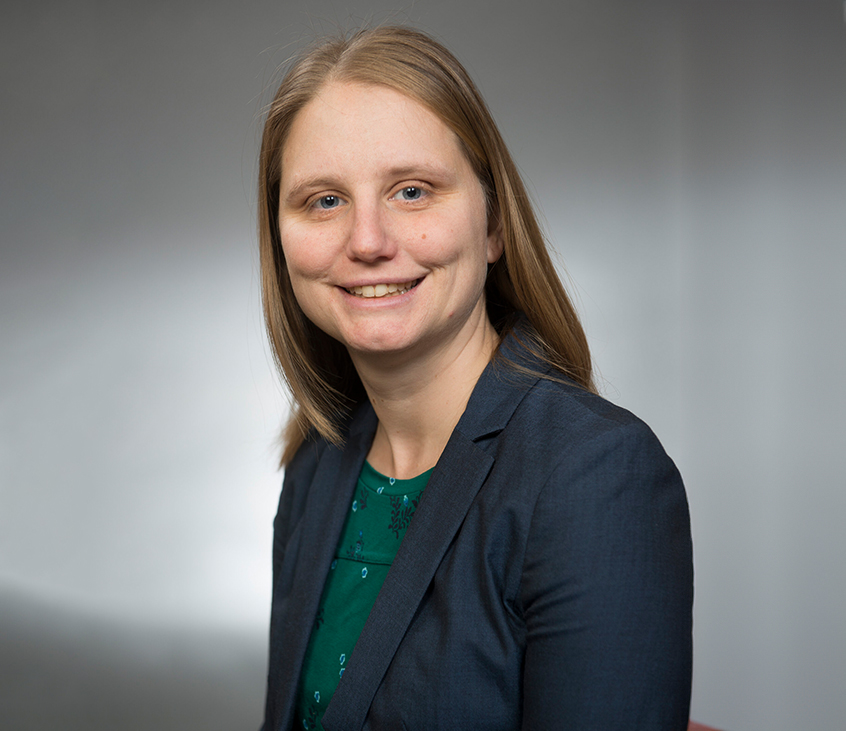
Karina Chavarria Postdoc
Karina Chavarria (she/her) is a postdoctoral researcher at UMass Amherst in Dr. Kumpel’s research group. She completed her B.S. degree in Civil and Environmental Engineering from UCLA in 2012 and worked for a short time as a civil engineer for the Los Angeles Bureau of Sanitation (On-Site Wastewater Treatment Systems Division). In 2014, Karina received her M.S. in Civil and Environmental Engineering from UC Berkeley and after joined the Foundation Cantaro Azul in Chiapas, Mexico to work on the development of water quality testing protocols and surveys for the National Assessment of Drinking Water Access in Rural Communities in Mexico. In 2016, she started her Ph.D. at UC Berkeley (completed in 2021), investigating the effects of land use on water microbiomes and the effects of treatment, distribution, and intermittent water supply (IWS) on microbial communities in drinking water in Panama. During her Ph.D., Karina was a research fellow at the Smithsonian Tropical Research Institute, where she continued her research as a postdoctoral fellow. Her current research includes understanding how key features of IWS influence disinfection byproducts and microbial communities in distribution systems. Her broader research interests include impacts of climate change on water microbial ecosystems, microbial communities at the interface of drinking water infrastructure and environmental health, waterborne pathogens, and sustainable drinking water and sanitation.

Nelson da Luz Postdoc
Nelson da Luz is a Postdoctoral Research Associate in the Kumpel Lab Group. He earned his PhD under Dr. Emily Kumpel with the dissertation “Enhancing Management of Built and Natural Water and Sanitation Systems Using Data Science.” In his research, he works at the confluence of data intensive computing and civil infrastructure related to water and sanitation. He employs investigative tools such as modeling, simulation, high performance computing, machine learning, and dataset usage and manipulation. He received his BS in Civil Engineering and ME in Environmental Engineering from Manhattan College in Riverdale, NY. He has had his Engineer in Training qualification since 2015. Past research projects have included bioaccumulation and sediment transport modeling, evaluating water quality monitoring programs for distribution systems, and developing tools for evaluating surface water quality monitoring programs. Nelson has been an instructor for the UMass College of Engineering First Year Seminar twice, designing and teaching the course “Working with Data for Engineers.” When he’s not doing research, Nelson enjoys exploring cities, hiking, cooking, and pyrography.
Current research: Source Water Protection and Management Project for MassDEP, Innovative Technologies Project for ASDWA, and prediction of buried sanitation infrastructure type using machine learning
Ciara Little PhD
Ciara Little is pursuing their Ph.D. in Environmental and Water Resources Engineering at the University of Massachusetts, Amherst. Ciara is a Spaulding Smith Fellow and a recipient of the Dean’s First Year and GEM Fellowship. They earned their BS in Mechanical Engineering from Columbia University in 2021. During this time their research focused on human-centered design and robotics, material testing, and sustainability. Their current research interests center on equity and access to water quality and infrastructure under intermittent water supply. Their broader research interests include sustainable development, water reuse, climate change impacts, decision-making under deep uncertainty, and system adaptability. Ciara supports and contributes to efforts to increase representation and inclusion in STEM, and in their free time, they enjoy writing, art, and tending to their many houseplants.
Current research: Developing a drinking water typology for public water systems, Developing a framework to understand and model reliability and equity under intermittent water supply (IWS)
Gabriel Mesole PhD
Gabriel Mesole is pursuing his PhD in Environmental and Water Resources Engineering. Gabriel is a Gates Millennium Scholar (Class of 2016), and he graduated from the University of Maryland, College Park, with a bachelor’s degree in Environmental Science and Technology. Gabriel is interested in pathogen detection, transmission, and antibiotic resistance in drinking water systems. In addition, he aims to work with low- and middle-income countries’ water, sanitation, and hygiene issues to develop innovative solutions and achieve equitable, accessible, and reliable clean water. During his downtime, Gabriel enjoys playing/watching soccer, hiking, listening to podcasts, cooking, and photography.
Current research: Analyzing Microbial Communities and Seasonal Total Coliform Blooms in the Quabbin Reservoir
Poonam Tajanpure PhD
Poonam Tajanpure is currently pursuing her PhD in Environmental and Water Resources Engineering at the University of Massachusetts, Amherst. She received her Bachelor of Technology in Agricultural Engineering from Mahatma Phule Krishi Vidyapeeth, India and Master of Arts in Development Studies from Tata Institute of Social Sciences, India. Her research interests are centered on advanced causal machine learning, data mining, and satellite image applications to better understand environmental and public health issues. She is interested in learning about the impacts of climate change on water quality monitoring, water access and equity.
Kevine Odira PhD
Kevine Odira is currently pursuing his PhD in Civil and Environmental Engineering at the University of Massachusetts, Amherst. He holds a bachelor’s degree in Environmental and Biosystems Engineering from the University of Nairobi, Kenya. Kevine’s experience includes working as an Operations Associate and Intern at PowWater in Nairobi, Kenya where he conducted field water sampling and quality analysis, and contributed to water quality improvement projects. Kevine is passionate about working with organizations that promote Water, Sanitation, and Health (WASH) initiatives, as well as sustainability efforts. Additionally, he has a great love for tea.
Current research: “Turning Home Water Storage from Risk into Reliability.” Kevine’s work advances home water storage design to ensure resilience against supply interruptions while preserving water quality integrity.
ALUMNI:
Liam Amery MS
Liam Amery (he/him) is a master’s student in Environmental and Water Resources Engineering. His undergraduate thesis was a statistical analysis of the results of 5+ years of lead and copper testing in water in Massachusetts schools and the factors associated with elevated lead levels. Now he is a research assistant working on the MADEP Expanded Assistance Program for Lead in Drinking Water in Schools and Childcare Facilities. After graduation he wants to continue doing work related to drinking water, either as a consultant or continuing as a researcher; his main inspiration is improving the quality of and access to clean water for everyone. Outside of academics Liam loves hiking, running, and watching or playing soccer. Liam is co-advised by John Tobiason.
Current research: Lead contamination in Massachusetts school/childcare drinking water
Amanda Marques PhD
Amanda Marques is currently pursuing her PhD in Environmental and Water Resources Engineering at the University of Massachusetts, Amherst. She received her Bachelor of Science in Water Resources and Environmental Engineering from Federal Fluminense University, Brazil, with a Minor Degree in Sustainability Studies from Roger Williams University. Amanda received her Master of Science in Civil and Environmental Engineering from Rio de Janeiro Federal University, Brazil. Her work there as a graduate research assistant was to investigate water demand and supply projections under climate change scenarios, aiming to come up with sustainable ways to manage multiple water uses within one of Brazil’s most challenging watershed. She started her PhD at UMass Amherst in the Spring of 2020. Her research focus on water quality in the Wachusett and Quabbin reservoirs of the Commonwealth of Massachusetts. Amanda enjoys traveling, outdoor activities, cooking, and photography. Amanda is co-advised by Christian Guzman.
Current research: Reservoir water quality modeling; Surface-subsurface contaminant transport characterization using environmental tracers.
Tom Roberts MS
Tom Roberts is a master’s student in Environmental and Water Resources Engineering at the University of Massachusetts Amherst. He graduated from UMass in 2021 with a BS in Civil Engineering and a BA in Economics. Tom’s undergraduate thesis investigated the extent and distribution of PFAS contamination in Massachusetts water supplies, overlaying water quality data with sociodemographic data. For his master’s research, Tom is investigating disinfection byproduct (DBP) formation and speciation in intermittent systems. After graduation, he is interested in pursuing a PhD with research interests in drinking water quality, organic matter, chemical disinfection, DBPs, and sustainable development. Tom supports efforts to increase representation and inclusion in STEM, and in his free time, he can be found running, drinking coffee, or listening to public radio. Tom is co-advised by Dave Reckhow.
Current research: DBPs in intermittent water supply, photolysis of N-DBPs, impact of storm events on DBP formation and speciation
Mitchel Ghantous MS
Mitchel Ghantous is currently pursuing a master’s degree in Environmental and Water Resources Engineering at the University of Massachusetts Amherst. He completed his B.S. in Civil Engineering at UMass in 2020. His undergraduate thesis was focused on exploring how cyclic pressures typical in intermittent water supply systems affect the fatigue lifetime of pipes. After graduation, he worked briefly as a lab technician for the environmental company Clean Harbors before returning to UMass as research assistant in 2024. His current research is focused on understanding the prevalence of disinfection by-products (DBPs) and opportunistic pathogens (OPs) in a variety of water distribution systems across the United States. His goal is to produce a health risk assessment that would better inform utility decision-making when optimizing treatment of both DBPs and OPs. He is co-advised by Professor Mariana Lopes. Mitchel is personally interested in learning more about gas chromatography method development and optimization. In his free time, he enjoys exercising, looking at trees, and learning to play piano.
A Title to Turn the Visitor Into a Lead
This is your chance to emphasize why the visitor should contact you right now.